


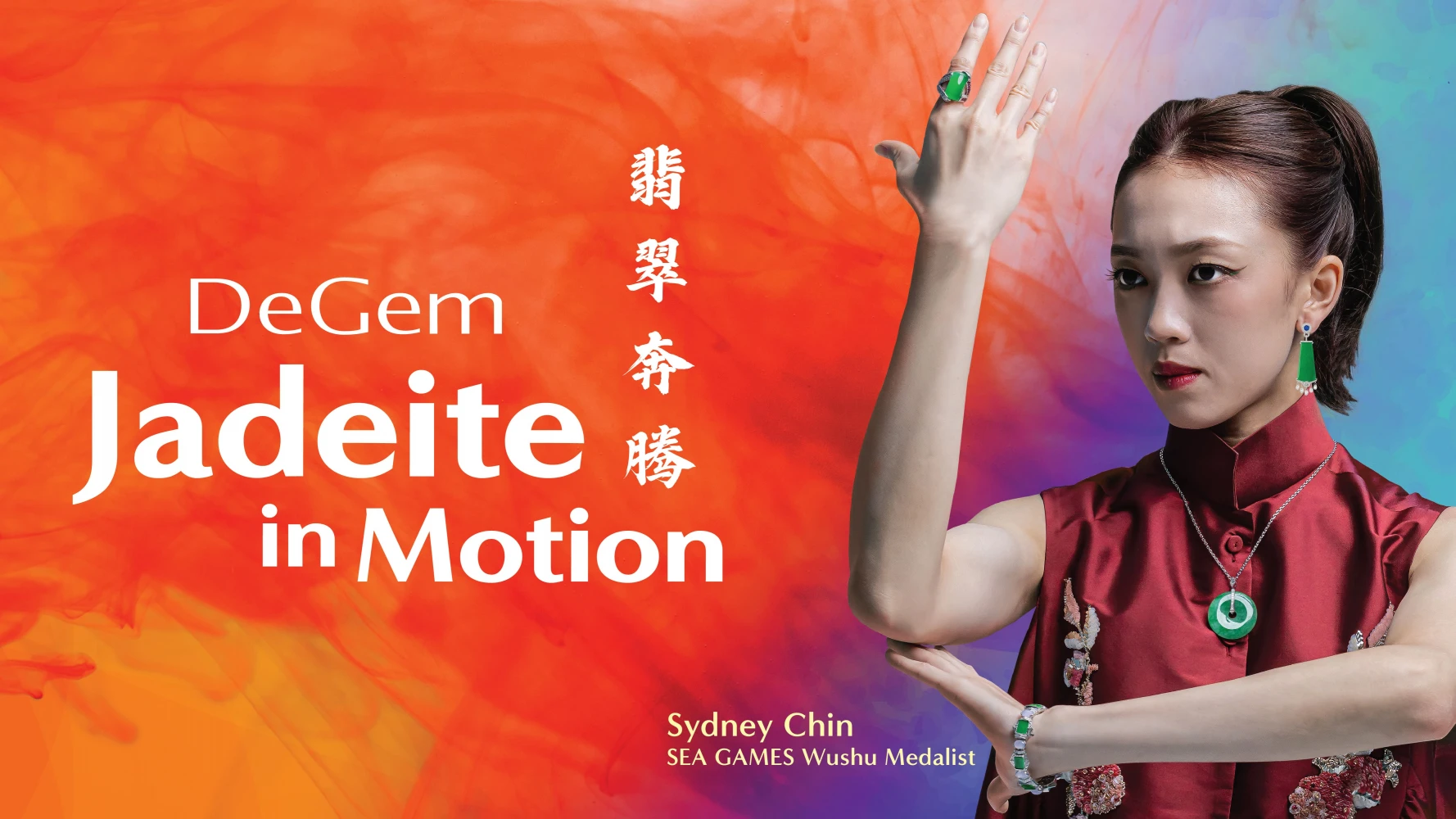
DeGem Jadeite in Motion — featuring Sydney Chin, SEA Games Wushu Medalist
What is Jadeite Jewellery?
Jadeite jewellery is crafted from jadeite (翡翠) — the rarest and most valuable form of jade. Prized for its vibrant colours, glass-like translucency, and exceptional hardness (Mohs 6.5–7), jadeite is sourced primarily from Myanmar (Burma). Its high market value, deep cultural roots in Chinese and Southeast Asian heritage, and limited global supply make it one of the world's most coveted gemstones. In Malaysia, jadeite jewellery is treasured both as a personal adornment and as a meaningful gift passed across generations.
If you have ever admired a deep green pendant in a jewellery store and wondered why it commands such a striking price, the answer almost certainly lies in the stone itself. Jadeite is not simply green jade — it is the finest, rarest, and most scientifically distinct form of jade in existence.
This guide covers everything a Malaysian buyer needs to know: what jadeite actually is, why its value is so extraordinary, how quality is graded, how to spot authentic pieces, and where to buy with complete confidence.
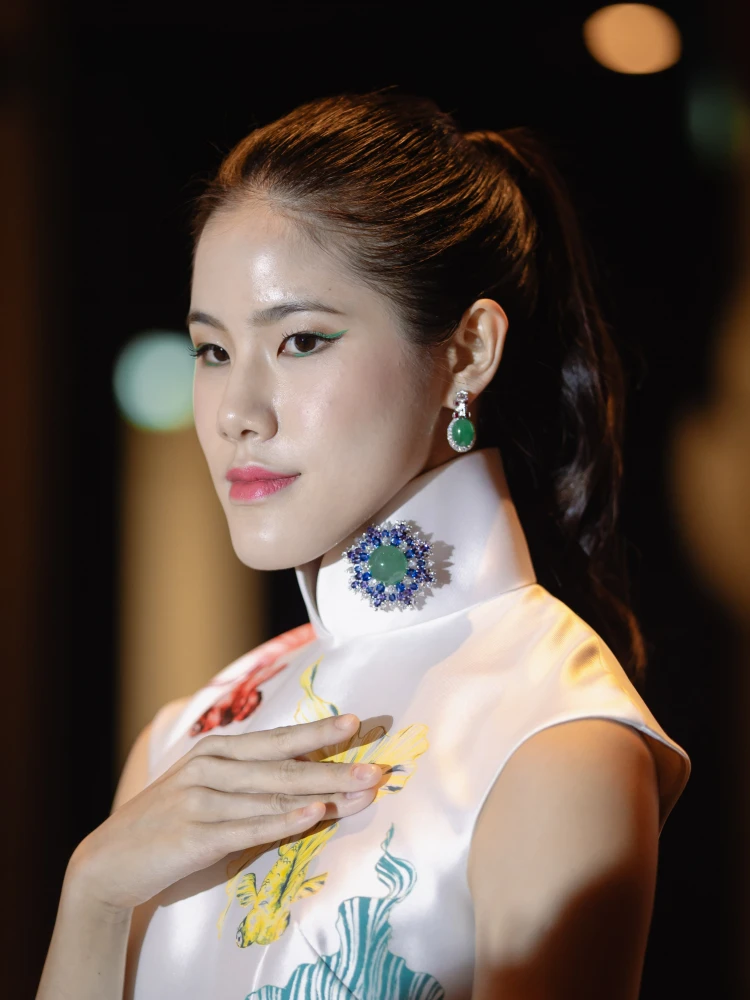
DeGem jadeite jewellery styled for a contemporary Malaysian occasion
Explore our jadeite collection at DeGem. Beautifully crafted, certified, and ethically sourced — browse our range now at DeGem Gemstones.
What is Jadeite?
Jadeite is a pyroxene silicate mineral — a naturally occurring gemstone formed under high-pressure, low-temperature conditions deep in the earth's crust. The vast majority of gem-quality jadeite originates from the Hpakant region of Myanmar, though small deposits exist in Guatemala, Japan, and Kazakhstan.
In everyday language, both jadeite and nephrite are referred to as 'jade'. However, these are two distinct minerals. Jadeite is significantly rarer, harder, and more intensely coloured than its counterpart, which explains the considerable difference in value between the two.
Key fact: Not all jade is jadeite. When purchasing fine jade jewellery in Malaysia, always confirm which mineral you are acquiring. For higher-value pieces, it is advisable to ask whether the stone comes with a grading certificate from a reputable gemological laboratory — such as the GIA (Gemological Institute of America) or GRS (Gem Research Swisslab). A certificate confirms the stone's identity, treatment status, and origin, providing you with independent assurance before any purchase.
Why Jadeite Jewellery is So Valuable
Jadeite's extraordinary value is driven by three intersecting factors: geological rarity, exceptional physical properties, and centuries of cultural significance.
Rarity
Gem-quality jadeite deposits are found in very few locations worldwide, and the finest material — particularly translucent Imperial green jadeite (帝王绿) — is exceptionally scarce. As demand from Chinese and Southeast Asian collectors continues to rise, supply constraints have pushed prices to record levels at major auction houses.
Translucency & Colour
Colour is jadeite's single most important value factor. The most prized variety is Imperial jade, characterised by an intense, pure emerald green with no grey undertones. Other highly valued colours include:
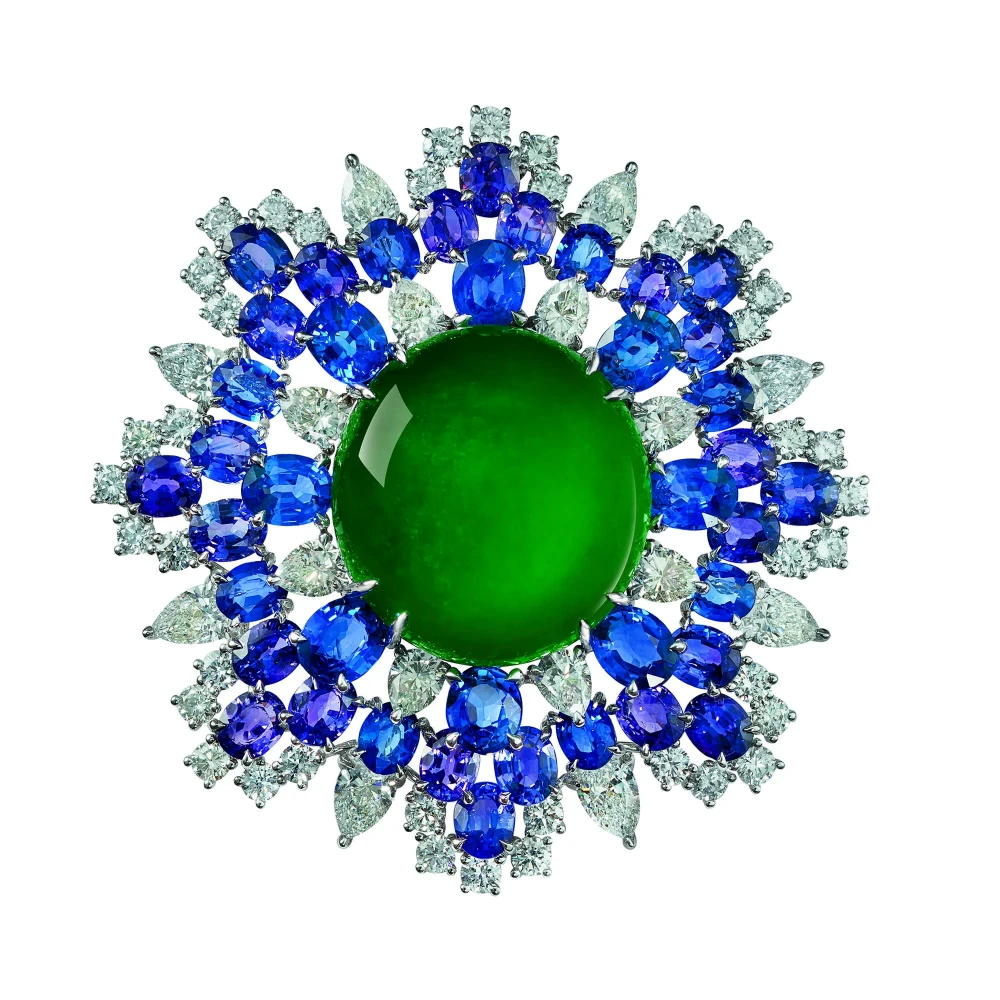
DeGem Blooming Jade Pendant & Brooch — Cabochon with Sapphires and Diamonds
-
Lavender jadeite — the second most sought-after variety, commanding approximately RM 800 to RM 12,000 per carat.
-
Kingfisher jade — vivid green, only marginally less intense than Imperial
-
Apple jade — a bright, slightly yellowish green
-
Moss-in-snow jade — translucent white with vivid green veining
-
Icy white jadeite — prized for its near-glass-like clarity
Cultural Significance in Malaysia
In Chinese and Southeast Asian culture, jade has been revered for over 7,000 years as a symbol of purity, longevity, protection, and prosperity. In Malaysia's Chinese community — the country's second-largest ethnic group — jadeite jewellery holds profound meaning. It is gifted at weddings, newborn ceremonies, and significant birthdays, and is regarded as a generational treasure rather than a mere accessory.
This cultural depth is reflected in DeGem's designs: the Multi-Color Yuan Bao Jadeite Pendant evokes the Chinese symbol of treasure and wealth; the Lavender Green Hulu Jadeite Pendant and Gourd Jadeite Diamond Pendant carry the hulu (葫芦) motif — accumulation of abundance; while the Jadeite Diamond Ruby Horse Pendant and Jadeite Gallop Pendant celebrate the horse as a zodiac emblem of success, perseverance, and prosperity.
The Lavender Green Hulu Jadeite Pendant and Gourd Jadeite Diamond Pendant feature the hulu (葫芦) motif — a gourd form deeply rooted in Chinese symbolism. In Chinese, hulu (葫芦) is a homophone associated with concepts of protection and prosperity, and the motif is traditionally regarded as a symbol of longevity and continuity.
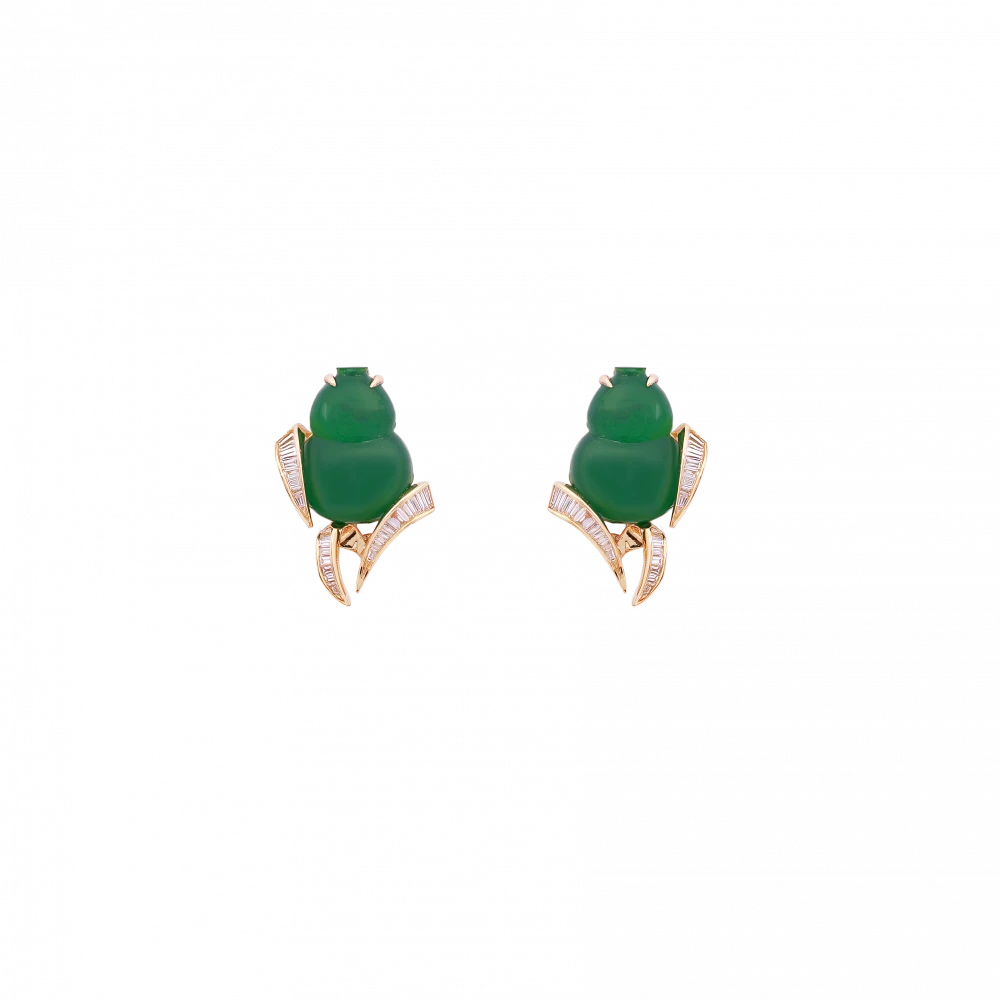
DeGem Hulu Jadeite Diamond Earrings — Hulu Gourd Motif Accumulation of Abundance
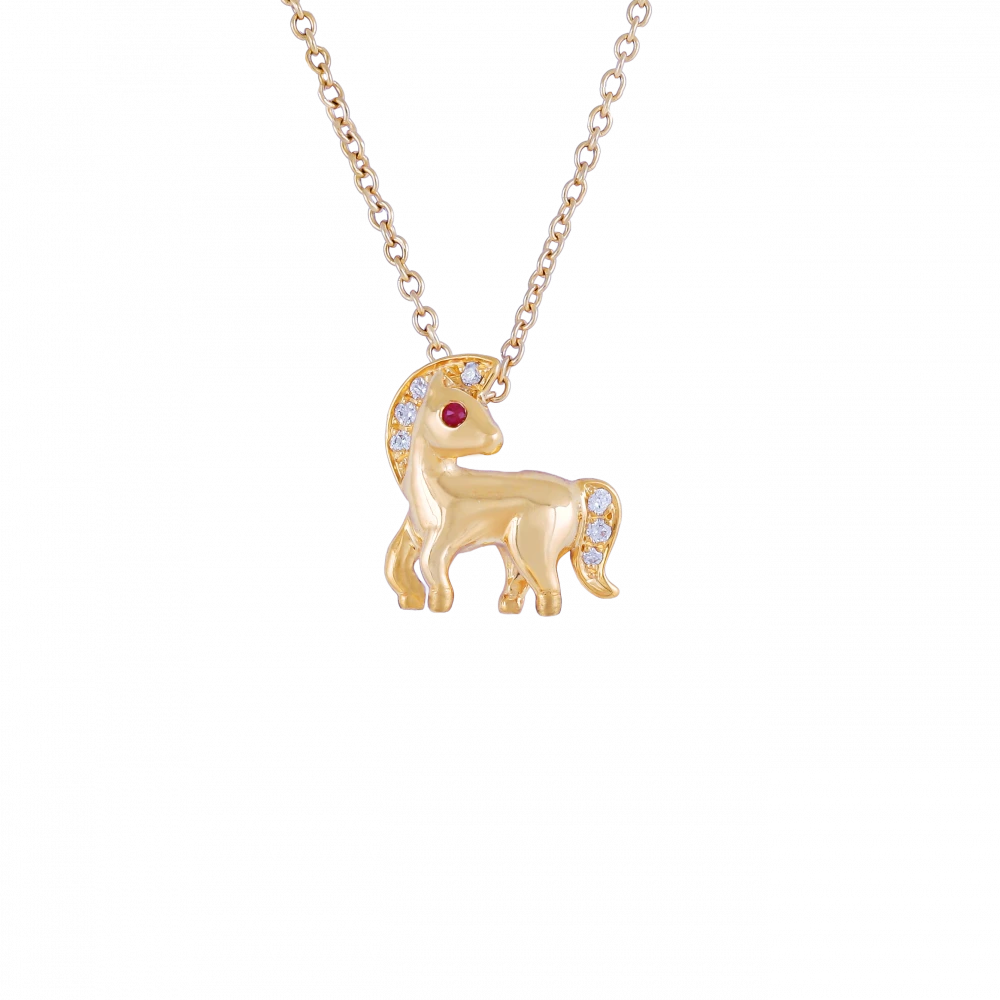
DeGem Jadeite Diamond Ruby Horse Pendant — Zodiac Collection, Symbolising Success and Perseverance
Types of Jadeite Jewellery
Jadeite is shaped into a wide variety of jewellery forms. Each piece type carries distinct cultural connotations and practical considerations:
-
Jadeite rings — Simple all-jadeite bands or saddle rings; the finest examples show uniform colour throughout
-
Jadeite bangles (hololiths) — Carved from a single piece of stone, making them particularly prized; no joins means no weak points
-
Jadeite pendants & necklaces — Among the most popular forms in Malaysia, often gifted to mark milestones or worn as protective talismans. Browse DeGem's Opulent Jadeite Fan Necklace or the elegant Peace Amulet Jadeite Diamond Pendant as starting points.
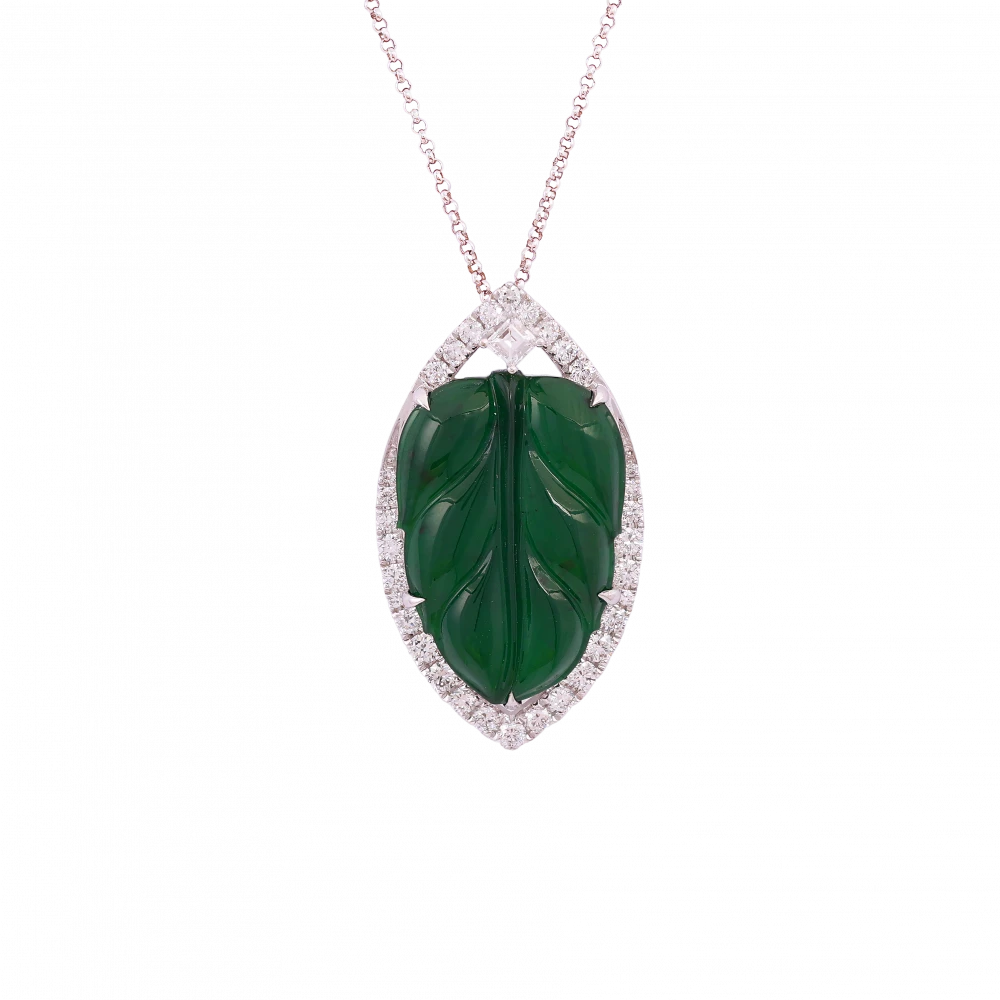
DeGem Leaf Jadeite Diamond Pendant — Hand-Carved Green Jadeite in White Gold and Diamond Setting
-
Jadeite Earrings — Elegant cabochon or drop styles suited to everyday wear. Explore the Cabochon Jadeite Ruby Diamond Earrings or the Circle of Happiness Jadeite Earrings at DeGem
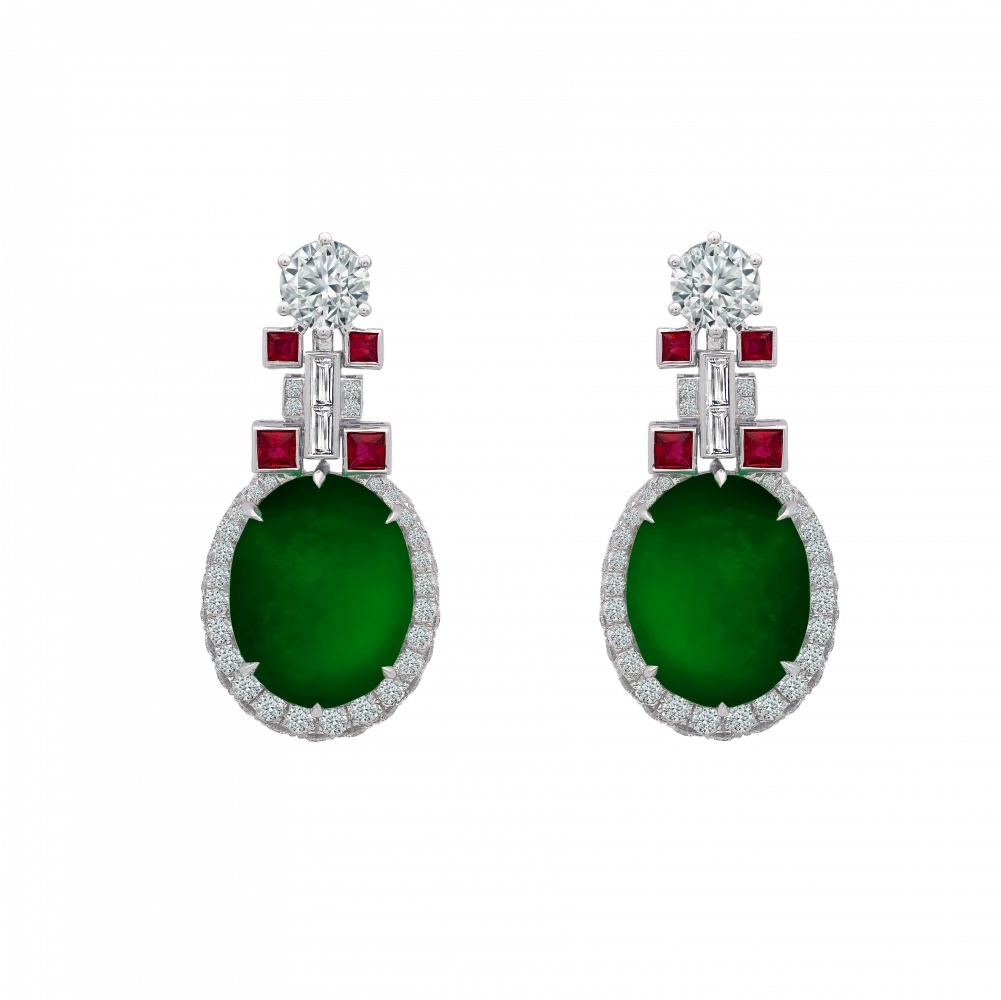
DeGem Cabochon Jadeite Ruby Diamond Earrings — Jadeite with Rubies and Diamonds
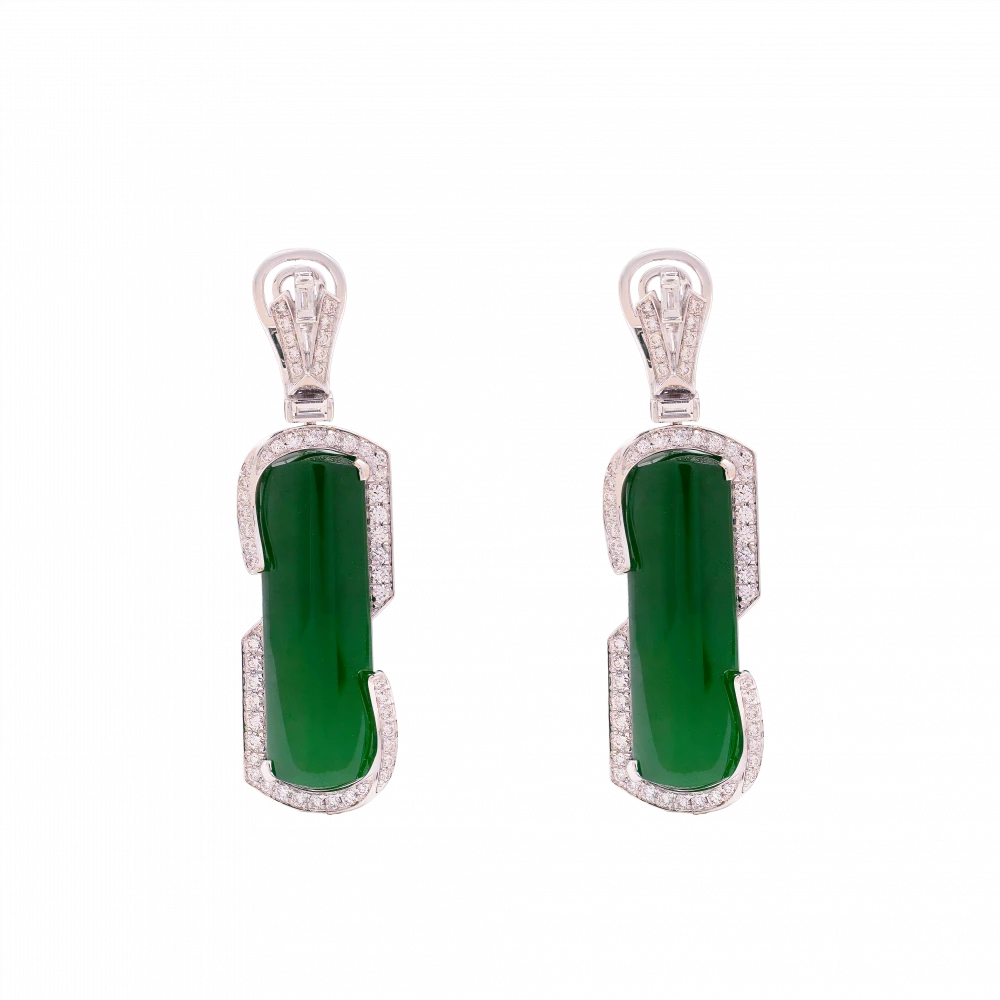
DeGem Peace Amulet Jadeite Diamond Earrings — White Gold and Diamond Setting
-
Jadeite Bracelets — Beaded or carved styles favoured for their flexibility in styling
Internal link opportunity: Browse DeGem's jadeite collection, gemstone jewellery category, and jadeite necklace range.
Jadeite Quality Factors: What Determines Value?
Understanding quality grading is essential whether you are buying for personal wear, gifting, or long-term investment. Jadeite's three primary value drivers are colour, transparency, and texture — in that order of importance.
Colour
Look for even saturation, vivid hue, and the absence of grey or brown undertones. Imperial green is the pinnacle. Consistency of colour across the entire piece is critical — patchy or uneven distribution significantly reduces value.
Translucency
The most desirable jadeite is described as glass-like (玻璃种) or ice jadeite (冰种) — nearly transparent with a brilliant internal glow. Semi-transparent pieces are still highly valued. Opaque material is considered commercial grade.
Texture
Fine-textured jadeite with an interlocking crystalline structure produces a smooth, lustrous surface. Coarse-grained material is less desirable and typically treated to improve its appearance.
Cut and Craftsmanship
Cabochons should display a high dome and flawless surface. Bangle hoops must be carved from a single piece (hololith) for maximum value. Any joins held together by metal settings reduce the stone's worth.
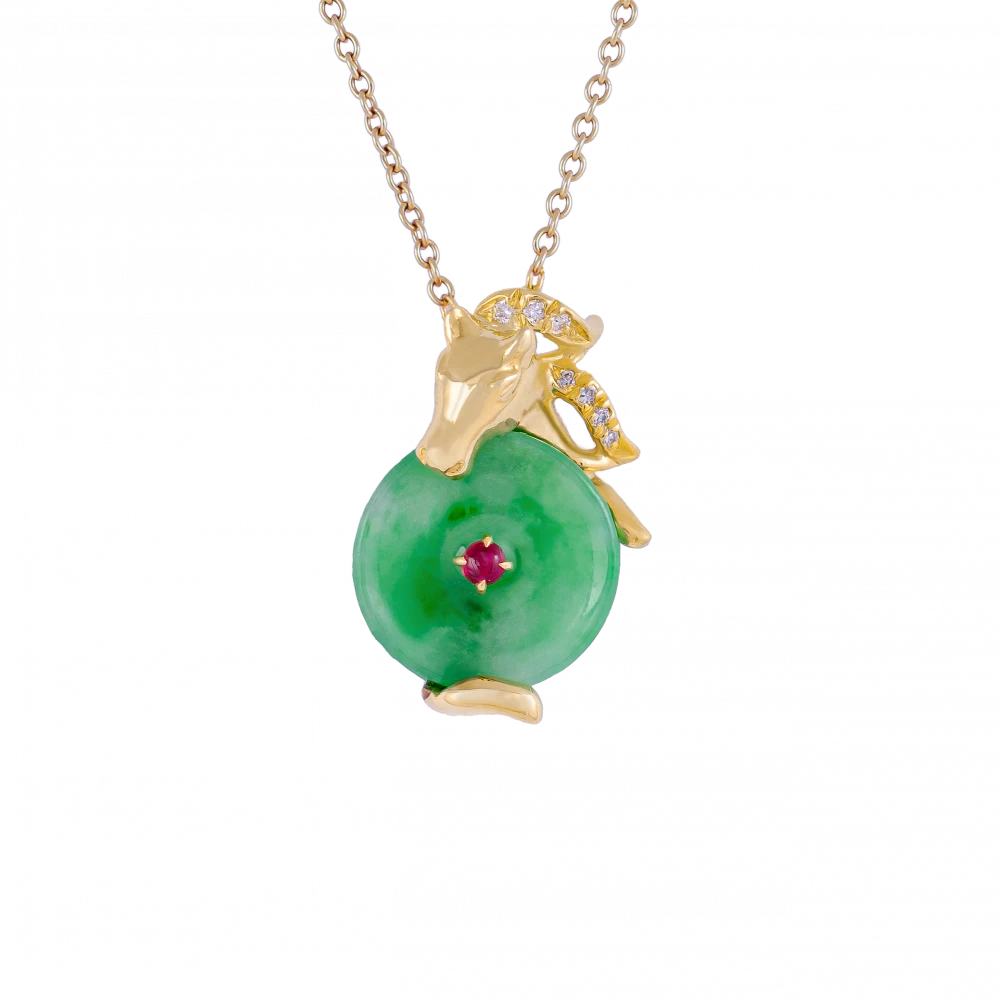
DeGem Jadeite Gallop Pendant — Type A Jadeite Huai Gu’ (怀古) with 18K Gold, Diamond & Ruby
Origin
Myanmar-origin jadeite consistently commands the highest premiums. Provenance documentation and independent gemological certification substantially increase both marketability and resale value.
A Note on Guatemalan Jadeite
While Myanmar (Burma) remains the world's foremost source of gem-quality jadeite, Guatemala is the only other significant producer of true jadeite in the world — and an important one at that. Guatemalan jadeite has been revered since the ancient Maya civilisation, which prized it above gold as a symbol of life, royalty, and the sacred.
Compared to Burmese jadeite, Guatemalan jadeite tends to display a broader colour palette — from deep forest green and blue-green tones to vivid apple green and rare lilac — and is often distinguished by a more opaque, strongly saturated appearance rather than the glass-like translucency prized in Imperial-grade Burmese material. Rather than competing with Burmese jadeite, Guatemalan jadeite offers a distinct character and heritage, catering to collectors and buyers who appreciate its unique colour profile and historical significance.
DeGem is proud to carry Guatemalan jadeite pieces alongside its Burmese jadeite collection, giving Malaysian buyers the opportunity to explore this exceptional stone from both of the world's great jadeite origins.
How to Identify Authentic Jadeite Jewellery
The Malaysian market, like most Asian markets, is home to a range of jadeite substitutes, simulants, and treated stones. Use the following checklist when evaluating a piece:
-
Request a gemological certificate: An independent lab report (GIA, GRS, or an equivalent accredited body) confirming the stone is natural, untreated Type A jadeite is the gold standard
-
Observe colour consistency: Natural jadeite has subtle, organic colour variation. Unnaturally uniform, overly bright colour may indicate dyeing (Type C treatment)
-
Assess translucency under light: Hold the stone up to a light source. Quality jadeite glows from within. Glass simulants appear hollow; cheaper substitutes look flat
-
Know the treatment grades and DeGem exclusive deals: DeGem exclusively offers Type A jadeite, meaning every piece is fully natural, untreated, and free from bleaching, polymer impregnation, or artificial colouring, preserving its original structure, durability, and lasting beauty. In contrast, Type B jadeite is chemically bleached and filled with polymer resin, which can degrade over time, while Type B+C jadeite undergoes additional dyeing, making both unsuitable for long-term value. For investment or heirloom purposes, only Type A jadeite should be considered.
-
Buy from trusted, certified retailers: Established Malaysian fine jewellers with verifiable certification policies offer the safest purchasing environment
View Certified Jadeite Jewellery at DeGem. All DeGem jadeite pieces are independently certified and ethically sourced — visit degemdiamond.com
Jadeite vs Other Gemstones
How does jadeite compare to nephrite and emerald — gemstones it is often confused with or measured against?
|
Feature |
Jadeite |
Nephrite |
Emerald |
|
Hardness (Mohs) |
6.5–7 |
6–6.5 |
7.5–8 |
|
Rarity |
Very Rare |
Common |
Rare |
|
Primary Colour |
Vivid Green, Lavender |
Muted Green, White |
Deep Green |
|
Translucency |
High (glass-like) |
Lower |
Moderate |
|
Cultural Significance |
Very High (Chinese, SE Asian) |
High (Chinese) |
High (Western) |
Jadeite's combination of vibrant colour range, cultural heritage, and extreme rarity at the high end positions it uniquely in the global gemstone market — particularly within Southeast and East Asian collecting communities.
Where to Buy Jadeite Jewellery in Malaysia
Buying jadeite — particularly at mid to high price points — requires care. Here is what to consider:
Online vs Offline
-
In-store purchases allow you to physically inspect colour, translucency, and texture under professional lighting conditions, which is strongly recommended for higher-value pieces
-
Online purchases can be appropriate for certified pieces from reputable brands with transparent return policies and full documentation
What to Look for in a Seller
-
Independently certified inventory (GIA, GRS, or equivalent)
-
Transparent disclosure of jadeite grade (Type A, B, or B+C)
-
Clear provenance and sourcing information
-
After-sales service, including professional cleaning and restringing for beaded pieces
-
A verifiable track record in the Malaysian or broader Asian fine jewellery market
Why Choose DeGem for Your Jadeite Jewellery?
DeGem has been serving Malaysia's fine jewellery market for over 40 years. As one of the country's most established luxury jewellers, DeGem offers a range of compelling assurances for jadeite buyers:
-
Internationally certified coloured gemstones — DeGem carries one of Malaysia's most comprehensive ranges of independently certified coloured gemstones, including jadeite
-
Ethical sourcing — All gemstones are sourced directly from ethical mines globally, with full supply chain accountability
-
Expert craftsmanship — Pieces are designed and set to the highest standards of fine jewellery, with made-to-order options available for discerning customers
-
One-of-a-kind jewellery — DeGem's collection includes exclusive one-of-a-kind jadeite pieces, each a singular creation that cannot be replicated. For the discerning buyer who demands something truly unique, these pieces represent the pinnacle of DeGem's jewellery artistry — and an assurance that no one else will ever own the same piece
-
GIA-certified diamonds and gemstones — DeGem holds one of the widest GIA-certified ranges in Malaysia, offering buyers unmatched assurance
-
40+ years of trusted expertise — DeGem's longstanding reputation in the Malaysian market is built on transparency, quality, and genuine customer care
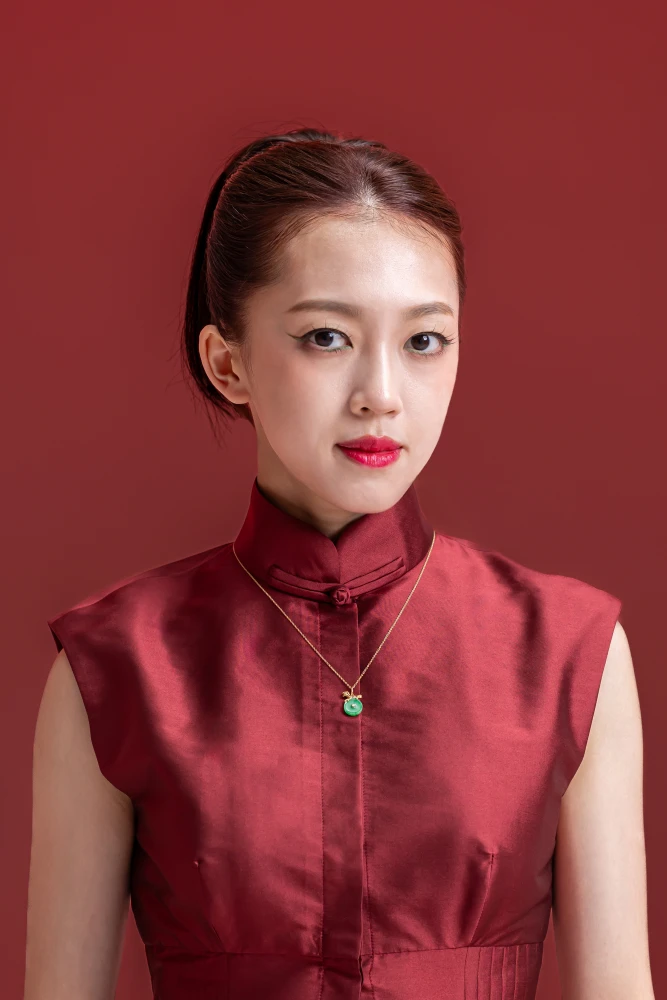
Sydney Chin, SEA Games Wushu Medalist, wearing DeGem's Jadeite Diamond Ruby Horse Pendant
Featured Jadeite Pieces from DeGem
-
Peace Amulet Jadeite Ruby Diamond Earrings — A striking pair of vivid green jadeite earrings set with rubies and diamonds in an elegant fine-jewellery setting
-
Cabochon Jadeite Ruby Diamond Earrings — Bold, vivid green jadeite cabochons framed by brilliant diamonds and accented with rubies; a striking expression of fine Malaysian jadeite craftsmanship.
-
Peace Amulet Jadeite Diamond Pendant — A refined tapered Type A jadeite pendant in 18K white gold with diamond-set casings; composed and distinctive
-
Green Hulu Jadeite Earrings — The coordinating earrings to the Hulu pendant collection
-
Multi-Color Yuan Bao Jadeite Pendant — Multi-colour translucent jadeite in the yuan bao motif; Art Deco Chinoiserie design symbolising wealth and fortune
-
Jadeite Diamond Ruby Horse Pendant — Zodiac Collection; jadeite with diamonds and ruby celebrating the horse as a symbol of success
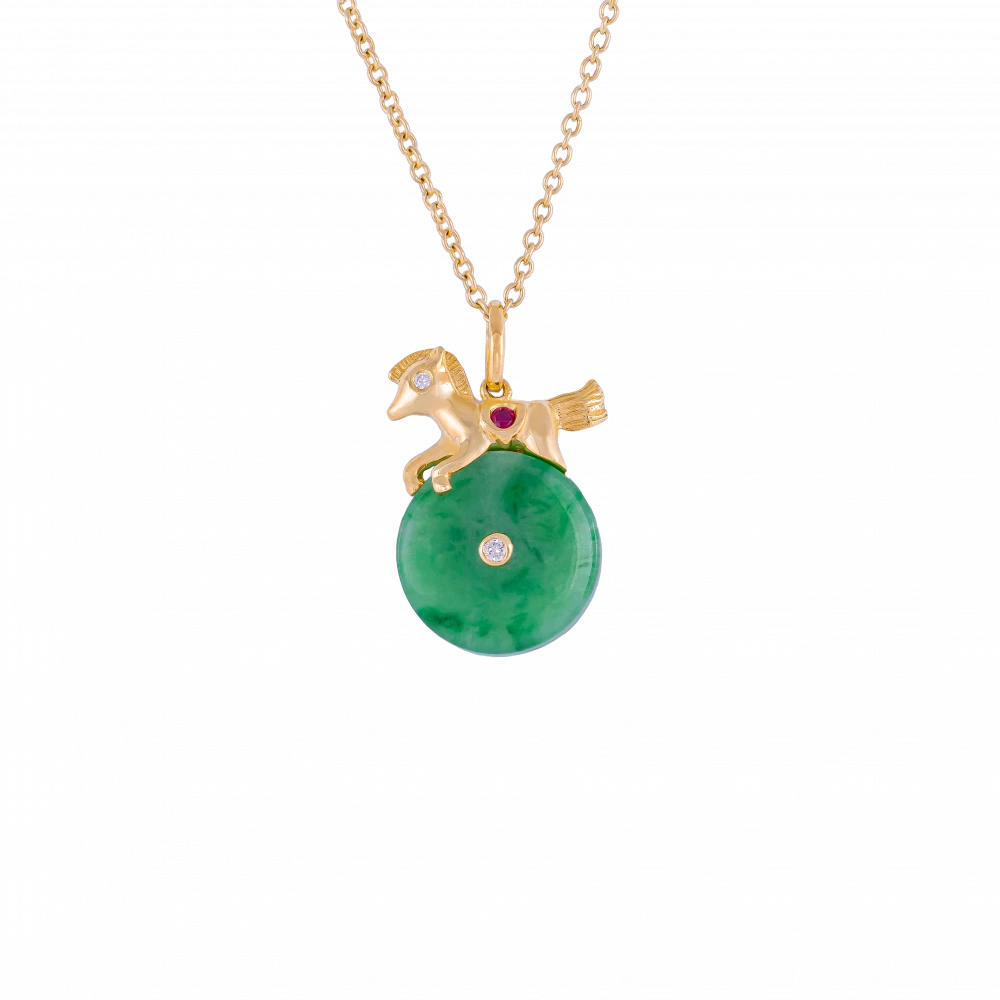
DeGem Jadeite Diamond Ruby Horse Pendant — Zodiac Collection
-
Jadeite Gallop Pendant — Zodiac Collection; an elegant jadeite pendant embodying vitality and perseverance
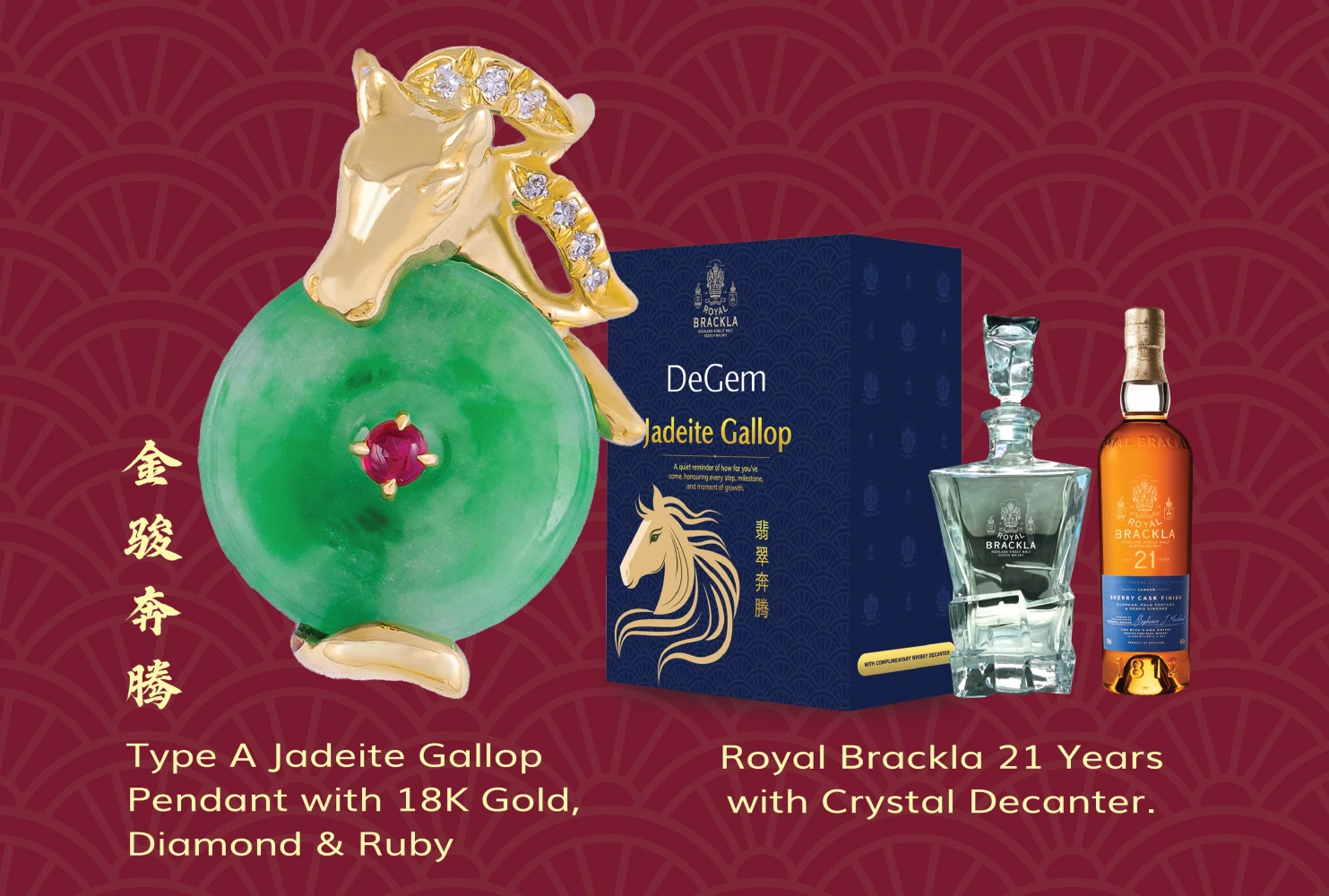
DeGem x Royal Brackla collaboration — Jadeite Gallop Pendant with Royal Brackla 21-Year Whisky
-
Gourd Jadeite Diamond Pendant — Hulu gourd motif in jadeite with diamonds; a timeless emblem of protection and the accumulation of abundance
-
Gourd Jadeite Diamond Earrings — Matching earrings to the Gourd Pendant; beautiful as a coordinated gifting set
-
Circle of Happiness Jadeite Earrings — A joyful and auspicious design suitable for gifting and everyday wear
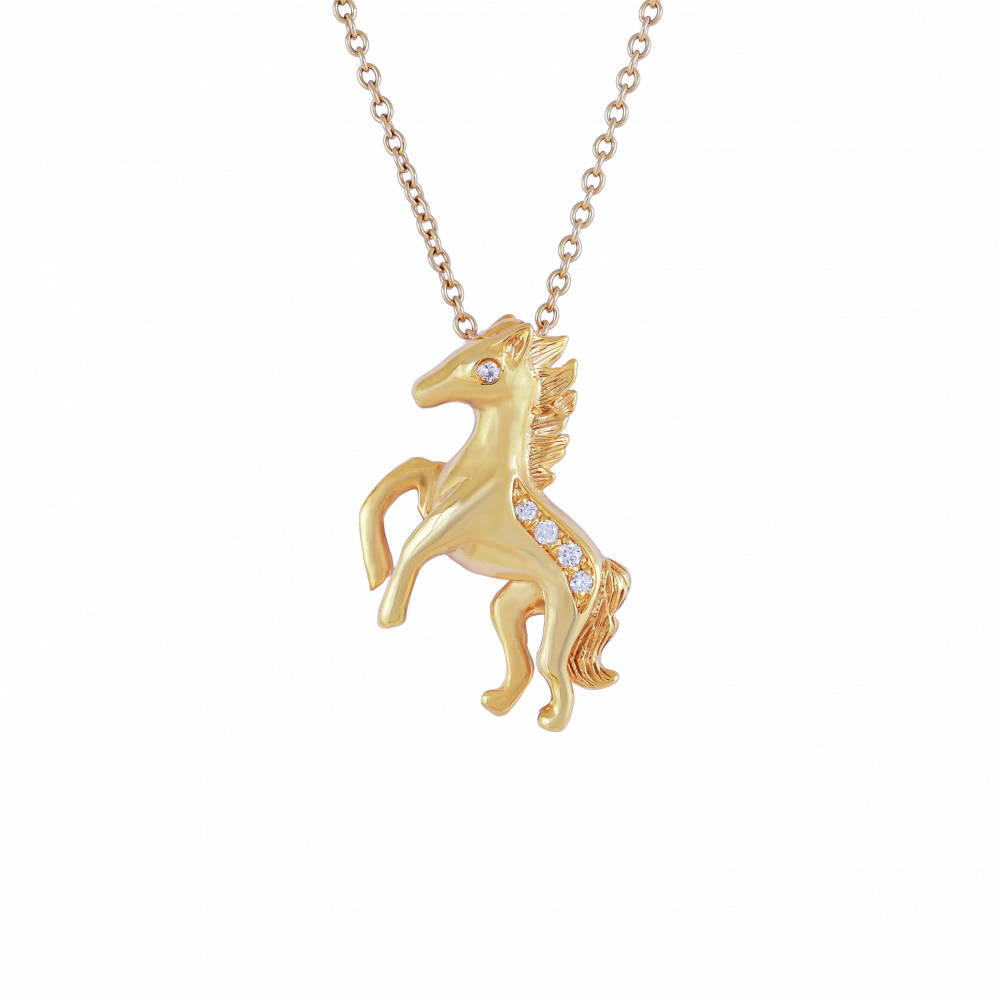
DeGem Golden Diamond Stallion Pendant — Zodiac Collection companion piece
Shop Authentic Jadeite Jewellery Now. Explore DeGem's certified jadeite collection — necklaces, pendants, rings, bangles & more at degemdiamond.com
Frequently Asked Questions (FAQ)
1. What is the difference between jadeite and nephrite?
Jadeite and nephrite are both commonly sold as 'jade', but they are two distinct minerals. Jadeite is rarer, harder (Mohs 6.5–7), more intensely coloured, and significantly more valuable. Nephrite is more abundant and typically displays softer, more muted tones. In the Malaysian and broader Asian market, jadeite — particularly Imperial-grade material — is by far the more coveted of the two.
2. How can I tell if jadeite is real or treated?
The most reliable method is to request an independent gemological certificate from a recognised body such as the GIA (Gemological Institute of America) or GRS (Gem Research Swisslab). These documents confirm whether a stone is natural and untreated (Type A), bleached and polymer-filled (Type B), or dyed (Type C / B+C). Visually, treated jadeite may show an unnaturally uniform colour, a resin-like surface sheen under magnification, or an unusual brightness inconsistent with natural material.
3. What is the jadeite price range in Malaysia?
Jadeite prices in Malaysia range from entry-level commercial pieces at a few hundred ringgit to high-end certified stones worth hundreds of thousands. Mid-quality certified jadeite pendants and necklaces typically fall in the RM 1,000–RM 20,000 range. High-end and Imperial-grade jadeite commands significantly higher premiums and is typically available through specialist fine jewellers. Always obtain a certificate for any purchase above entry-level pricing.
4. Is jadeite a good investment in Malaysia?
High-quality, certified, untreated jadeite has historically held and appreciated in value, driven by constrained supply and consistent demand from Chinese and Southeast Asian collectors. In Malaysia, jadeite jewellery also holds strong gifting and heirloom value. As with any gemstone investment, quality documentation, provenance, and purchasing through reputable retailers are essential to protect long-term value.
5. What is Imperial jadeite?
Imperial jadeite refers to the finest grade of jadeite, characterised by an intense, vivid pure emerald green colour and near-glass-like transparency. It is sourced almost exclusively from Myanmar. At its finest, Imperial jadeite is among the most expensive gemstones in the world — per-carat prices can range from approximately RM 40,000 to over RM 400,000, with exceptional pieces selling for millions of ringgit at international auction.
6. What jadeite jewellery types are most popular in Malaysia?
Jadeite pendants and necklaces are among the most popular forms in Malaysia, particularly for gifting at significant life events. DeGem's Peace Amulet Jadeite Diamond Pendant and Opulent Jadeite Fan Necklace are excellent examples of the range available. For earrings, the Circle of Happiness Jadeite Earrings and Gourd Jadeite Diamond Earrings represent popular styles. Jadeite bangles — especially hololith (single-stone) pieces — are highly prized by collectors. Jadeite rings are increasingly popular as statement pieces or as alternatives to traditional diamond engagement rings within communities where jade carries cultural significance.
| About the Author | ||
| DeGem |
||
| This article is written and reviewed by DeGem's in-house gemstone and fine jewellery specialists — a team with over four decades of expertise in ethically sourced precious gemstones and fine jewellery design. |
||
| Since 1980, DeGem has been Malaysia's premier jeweller, and our specialists are dedicated to helping you make informed, confident jewellery decisions. | ||
| Last Updated: May 2026 | DeGem Malaysia | www.degemdiamond.com |


